

ICSE Class 9 Computer Applications Classes
Build a strong Java and OOP foundation with BlueJ for the ICSE Class 9 Computer Applications syllabus.
A complete course covering the official CISCE ICSE Class 9 Computer Applications syllabus, taught with Java using the BlueJ IDE. Students learn object-oriented programming fundamentals, Java data types and operators, input handling, conditional and iterative constructs, and computing ethics, supported by guided lab assignments. Aligned to the current CISCE syllabus with theory and internal-assessment preparation.
What you'll learn
- ✓Distinguish procedure-oriented from object-oriented programming and explain core OOP principles
- ✓Describe the Java compilation process, byte code and the role of the JVM
- ✓Declare variables using correct Java data types and apply implicit and explicit type conversion
- ✓Build expressions using arithmetic, relational, logical and short-hand operators with correct precedence
- ✓Read run-time input using the Scanner class and identify syntax, runtime and logical errors
- ✓Use Math class library methods to solve computational problems
- ✓Write decision-making programs with if-else, if-else-if ladders and switch-case
- ✓Solve problems using for, while, do-while and nested loops, including patterns and series
Full syllabus
Mapped to the official ICSE curriculum.
01Introduction to Object Oriented Programming Concepts+
- Principles of Object Oriented Programming
- Difference between Procedure Oriented and Object Oriented programming
- Concepts of OOP: encapsulation, inheritance, polymorphism, abstraction
- Data abstraction and data hiding
02Introduction to Java+
- History and features of Java
- Types of Java programs: Applets and Applications
- Java compilation process
- Java source code, Byte code, Object code
- Java Virtual Machine (JVM)
03Elementary Concept of Objects and Classes+
- Modelling entities and their behaviour using objects
- Class as a group of objects / a user-defined data type
- Class as a blueprint and object as an instance
- Objects encapsulating state (data members) and behaviour (methods)
04Values and Data Types+
- Character set, ASCII code, Unicode
- Escape sequences
- Tokens: keywords, identifiers, literals, punctuators, operators
- Constants and variables
- Primitive and non-primitive (composite) data types
- Type conversion: implicit (coercion) and explicit (casting)
05Operators in Java+
- Forms of operators: unary, binary, ternary
- Arithmetic, relational, logical, assignment operators
- Increment and decrement operators (prefix and postfix)
- Short-hand / compound assignment operators
- Precedence and associativity of operators
- new operator for dynamic memory; dot operator to access class members
- Evaluation of expressions
06Working with Methods+
- Defining and using methods
- Method signature, parameters and return type
- Pure and impure methods
- Calling methods and passing arguments
07Input in Java+
- Initialization vs parameters vs run-time input
- Introduction to packages
- Input stream using the Scanner class
- Scanner methods: nextInt(), nextLong(), nextShort(), nextFloat(), nextDouble(), next(), nextLine(), next().charAt(0)
- Types of errors: syntax, runtime and logical errors
08Mathematical Library Methods+
- Introduction to the package java.lang (default)
- Methods of the Math class (pow, sqrt, abs, max, min, round, random, cbrt, ceil, floor, etc.)
09Conditional Constructs in Java+
- if, if-else, if-else-if ladder
- Nested if statements
- switch-case, default, break and fall-through
- Menu-driven programs
- System.exit(0) to terminate a program
- Ternary operator as a conditional construct
10Iterative Constructs in Java+
- Concept and types of loops
- Entry-controlled loops: for and while
- Exit-controlled loop: do-while
- Variations in looping statements
- Jump statements: break and continue
- Inter-conversion between for, while and do-while (finite and infinite loops)
11Nested for Loops+
- Concept of loops within loops
- Generating patterns of numbers, characters and symbols
- Series and table programs using nested loops
12Computing and Ethics+
- Ethical use of computers and software
- Intellectual property rights, plagiarism and software piracy
- Open-source vs proprietary software
- Responsible and safe computing
Tools you'll use
Exam pattern
Theory: one written paper of 2 hours for 100 marks (Section A compulsory short-answer questions, ~40 marks, covering the whole syllabus; Section B with choice, ~60 marks). Internal Assessment: 100 marks, based on practical lab assignments completed through the year.
Practical / project
Internal Assessment (100 marks) through practical Java/BlueJ lab work. Students complete a minimum of 20 lab assignments across the year to reinforce concepts covered in class, evaluated by the subject teacher.
Who it's for
ICSE Class 9 students beginning programming who want a solid Java and object-oriented programming foundation, and those preparing for the Class 9 theory exam and internal assessment ahead of Class 10 board work.
What's included
- ✓Live, interactive online classes with Kajal Ma'am, concept-first teaching with shared-screen Java coding in BlueJ
- ✓Chapter-wise Kwick Notes covering every unit of the CISCE ICSE Class 9 Computer Applications syllabus
- ✓Worked textbook solutions (APC / Kips BlueJ style) with fully explained Java programs
- ✓Regular programming assignments, a minimum of 20 lab programs across the year, matching ICSE Internal Assessment expectations
- ✓Live doubt-solving sessions where students get individual answers, not generic replies
- ✓Theory exam practice with section-wise question sets modelled on the 2-hour, 100-mark written paper
- ✓BlueJ practical and Internal Assessment guidance, writing, running and debugging programs for the lab record
- ✓Pre-exam revision sets on output, error-spotting and program-writing questions
Why study Computer Applications?
ICSE Class 9 Computer Applications is where students first meet Java, BlueJ and object-oriented programming, the exact foundation the Class 10 board paper and Internal Assessment build directly upon. The Class 9 course carries a 2-hour, 100-mark theory paper plus 100 marks of practical Internal Assessment, so habits formed now (clean program structure, correct data types, accurate output tracing) decide how confidently a student scores in Class 10. Because the syllabus is highly logical and predictable, it is also one of the most genuinely scoring subjects when the fundamentals are understood rather than memorised. Getting Java right in Class 9 turns the Class 10 board year from catch-up into consolidation.
Java is one of the most widely used languages in software engineering, Android development and enterprise systems, and the object-oriented thinking introduced here underpins almost every modern programming language. A strong Class 9 start gives students a real head-start toward computer science and engineering streams in Class 11-12 and toward B.Tech, BCA and CS degrees. The logic, debugging and problem-solving skills built here also transfer directly to data, AI and IT careers.
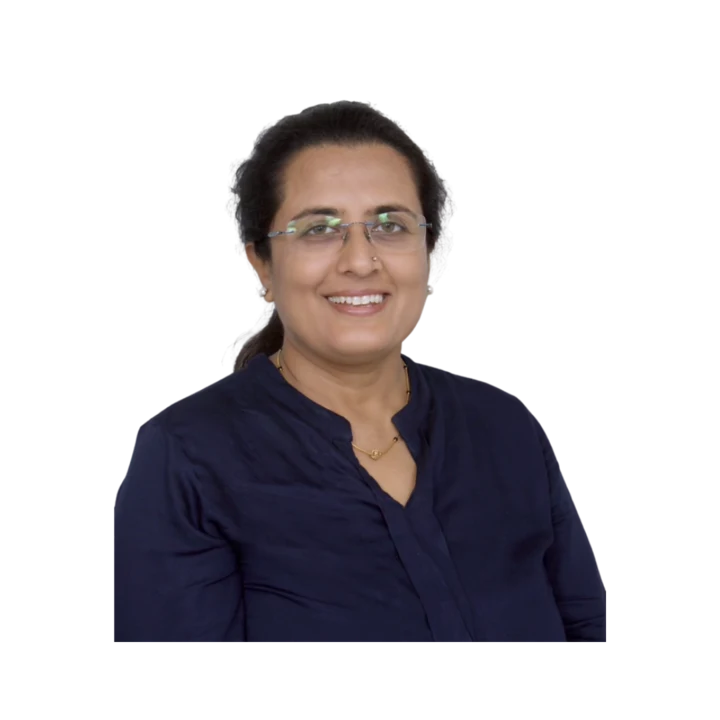
Learn directly from Kajal Ma'am
An MCA who has taught computer subjects since 2004, Kajal Mehta personally mentors every batch, turning dense theory into clear, exam-ready understanding.
The Kwickprep Method
Computer subjects are not learnt by memorising code. Since 2006, Kajal Ma'am has taught ICSE Class 9 Computer Applications with one simple loop that turns logic into marks:
Concept in plain words
Every topic starts from why it exists and what problem it solves, before any code.
Worked through live with you
Kajal Ma'am writes and runs it on a shared screen, so you see it work, not just read it.
Board-pattern practice
You solve the exact question types that repeat in your board's paper, section by section.
Doubts till it clicks
Ask anything, any time in the live class. Nothing moves on until the concept is clear.
Exam & practical drill
Full papers, the practical file, the project and viva, rehearsed until you walk in confident.
Where this takes you
This is not just a subject to clear, it is a skill that carries forward:
- →Java & object-oriented programming the base of Android and enterprise software.
- →Logic building with BlueJ clean problem-solving, not memorising.
- →App-development foundations how real software is structured.
It opens B.Tech, BCA and software development, and is the perfect base for ISC Computer Science with Java. We teach for the board first, and for the thinking that lasts after it.
What students say
“I joined the CS40+ course in January 2023, and it was completed within the mentioned time. I found the course very effective and well-organized. The teaching method and study material are up to the mark. I learned new things, and rather than mugging up the code, I learned to develop logic.”
“I have enrolled in the Kwick Revision course, which is designed for 10 days. They have covered all the topics in meticulous time. The teaching method was good. Study materials and course content were up to the mark. Educators resolved doubts within the committed time only.”
“Thank you so much ma'am for believing in me and teaching me so well that i developed interest in computer science. i'll always be grateful for the help you've done. i'll surely miss our classes. Take care of your health ma'am. Once again Thanks a lot ma'am.”
Read all 36 verified student & parent reviews (4.9/5) or see the board results.
Course FAQs
Are the ICSE Class 9 Computer Applications classes live or recorded?+
Do you offer both group batches and one-to-one classes, and how do the fees differ?+
Is the course aligned to the official CISCE ICSE syllabus?+
Will the course help with the BlueJ practical exam and Internal Assessment?+
My child has never coded before, is Class 9 Computer Applications difficult?+
Can we try a class before enrolling?+
Related courses
Computer Applications
Master Object-Oriented Programming in Java with BlueJ for the ICSE board exam.
Computer Applications
Master computer fundamentals, cyber safety, and office tools for CBSE Class 9 Computer App
Computer Applications
Master web design with HTML, CSS, networking and cyber ethics for the CBSE Class 10 Comput
What students & parents say
4.9/5 from 36 verified student & parent reviews. Below are three, unedited.
My experience with Kwickprep was truly amazing. The course quality, teaching style, and study materials were all excellent, everything was taught in a very clear and organized way. What I found most valuable was the systematic and easy-to-follow teaching method. It really helped me take better notes during class and made revision much simpler. The entire course was completed on time, just as planned, which gave me enough space to revise thoroughly and solve sample papers without any rush. I also really appreciated how responsive the educators were, I always got replies within the promised time whenever I had any doubts. Overall, it was completely worth it, and I'm really happy with the way everything was handled. Thank you, Kwickprep!
I have joined kwick revision course before board examination. It found very useful for preparation of board examination. Educator cover all the topics. Investment of time was worth. Study material and sample paper practice were well organised.
Dear Kajal Ma'am, Yash has done extremely well in CS Exam, with all your kind guidance and supports. Your Hard work towards Students is really appreciated, We are fortunate to connect with you at right time 🙏, Thank you so much for all 🙏😊
Book a free demo for Computer Applications
See a real class before you decide. No pressure, no payment.
Book Free Demo on WhatsApp