

CBSE Class 12 Artificial Intelligence (AI) Classes
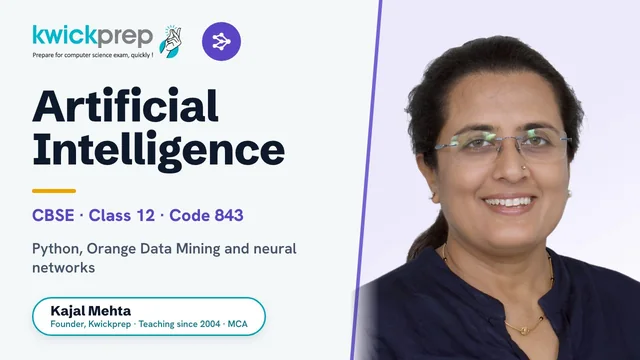
Master CBSE Class 12 AI (Code 843) with hands-on Python, Orange Data Mining, neural networks and a real Capstone Project.
A complete preparation course for CBSE Class 12 Artificial Intelligence (Subject Code 843), built around the official 2026-27 Department of Skill Education curriculum. Covers Python for data analysis, data science methodology, computer vision, Orange Data Mining, big data, neural networks, generative AI and data storytelling, plus full Capstone Project guidance. Balanced for the 50-mark theory and 50-mark practical assessment, including the Practical File, Lab Test and Viva Voce.
What you'll learn
- ✓Use NumPy and Pandas to import, clean, handle missing values in, and analyze CSV/DataFrame datasets
- ✓Apply the Data Science Methodology and evaluate ML models using MSE, RMSE, Precision, Recall, F1 score, accuracy and confusion matrices
- ✓Explain how computer vision works and run basic image operations with OpenCV
- ✓Build no-code AI workflows in the Orange Data Mining tool for classification, visualization, computer vision and NLP
- ✓Understand Big Data characteristics and perform Big Data analytics
- ✓Describe the structure, components, types and working of neural networks, with hands-on TensorFlow/Keras models
- ✓Explore Generative AI and Large Language Models, including ethical implications and building a chatbot with the Gemini API
- ✓Craft compelling, ethical data stories and complete an SDG-aligned Capstone Project with documentation and video
Full syllabus
Mapped to the official CBSE curriculum.
01Part A, Employability Skills+
- Communication Skills-IV
- Self-Management Skills-IV
- ICT Skills-IV
- Entrepreneurial Skills-IV
- Green Skills-IV
02Unit 1: Python Programming - II (evaluated in practicals)+
- Recap of NumPy library
- Recap of Pandas library
- Importing and exporting data between CSV files and DataFrames
- Handling missing values
- Linear Regression algorithm (advanced learners)
03Unit 2: Data Science Methodology - An Analytic Approach to Capstone Project+
- Introduction to Data Science Methodology
- Steps for Data Science Methodology
- Model Validation Techniques
- Model Performance - Evaluation Metrics (MSE, RMSE, Precision, Recall, F1 score, Accuracy, confusion matrix)
04Unit 3: Making Machines See+
- How machines see
- Working of computer vision
- Computer Vision process
- Applications of computer vision
- Challenges of computer vision
- The future of computer vision
- Working with OpenCV - load, display, resize images (advanced learners)
05Unit 4: AI with Orange Data Mining Tool (evaluated in practicals)+
- What is Data Mining?
- Introduction to the Orange Data Mining tool
- Beneficiaries of Orange data mining
- Getting started with Orange
- Components of Orange
- Default Widget Catalogue
- Key AI domains with Orange - data science, computer vision, NLP
06Unit 5: Introduction to Big Data and Data Analytics+
- Introduction to Big Data
- Types of Big Data
- Advantages and disadvantages of Big Data
- Characteristics of Big Data
- Big Data Analytics
- Working on Big Data Analytics
- Mining Data Streams
- Future of Big Data Analytics
07Unit 6: Understanding Neural Networks+
- Parts of a neural network
- Components of a neural network
- Working of a neural network
- Types of neural networks
- Future of neural networks and societal impact
- Hands-on with TensorFlow and Keras (advanced learners)
08Unit 7: Generative AI+
- Introduction to Generative AI
- Working of Generative AI
- Generative and Discriminative models
- Applications of Generative AI
- LLM - Large Language Models
- Future of Generative AI
- Ethical and social implications of Generative AI
- Using the Gemini API to build a chatbot (advanced learners)
09Unit 8: Data Storytelling+
- Introduction to storytelling
- Elements of a story
- Introduction to data storytelling
- Why is data storytelling powerful?
- Essential elements of data storytelling
- Narrative structure of a data story (Freytag's Pyramid)
- Types of data and visualizations for different data
- Steps to create a story through data
- Ethics in data storytelling
10Part C, Practical Work / Project Work+
- Capstone Project (SDG-aligned, group of 3-5 students)
- Project Documentation
- 3-minute Capstone Project video
- Practical File - min 6 Python programs, 3 Orange Data Mining programs, 1 Data Story
- Lab Test (Python and Orange Data Mining)
- Viva Voce
Tools you'll use
Exam pattern
Total 100 marks: Theory 50 + Practical 50. Theory includes Employability Skills (Part A) and Subject-Specific Skills theory (Part B, 50 marks). Practical (Part C, 50 marks): Capstone Project 15 + Project Documentation 6 + Video 4 (= 25), Practical File 10, Lab Test on Python and Orange Data Mining 10, Viva Voce 5.
Practical / project
Practical File with a minimum of 6 Python programs, 3 Orange Data Mining programs and 1 complete Data Story; a group Capstone Project (3-5 students) aligned to a UN Sustainable Development Goal, with written documentation and an exactly 3-minute project video; plus a lab test on Python and Orange Data Mining and a viva voce. Projects may be built using Python or no-code/low-code tools like Orange.
Who it's for
CBSE Class 12 students taking Artificial Intelligence (Code 843) as a skill subject who want to build on Class 11 AI fundamentals, score well in both theory and practicals, and complete a strong SDG-aligned Capstone Project.
What's included
- ✓Live, interactive online classes with Kajal Ma'am, in a small Group batch or fully personal One-to-One mode
- ✓Chapter-wise Kwick Notes covering Python-II, data science methodology, computer vision, Orange Data Mining, big data, neural networks, generative AI and data storytelling
- ✓Step-by-step textbook and NCERT/Skill Education solutions for every Part A and Part B unit
- ✓Topic-wise assignments and practice worksheets after each unit to lock in concepts
- ✓Regular live doubt-solving sessions where you bring questions and get them cleared on a shared screen
- ✓Previous-year and sample board paper practice with marking-scheme-style feedback for the 50-mark theory exam
- ✓Guided Capstone Project mentoring (SDG-aligned), including project documentation and the 3-minute project video
- ✓Practical File preparation plus Lab Test (Python and Orange Data Mining) drills and Viva Voce preparation
Why study Artificial Intelligence?
CBSE Class 12 Artificial Intelligence (Subject Code 843) is a 100-mark skill subject split as 50 marks theory and 50 marks practical, which makes it one of the most scoring subjects on the Class 12 marksheet when both halves are prepared properly. The 2026-27 curriculum moves beyond Class 11 fundamentals into genuinely useful skills: Python with NumPy and Pandas, the data science methodology, computer vision, Orange Data Mining, big data, neural networks and generative AI. Because half the marks come from a Capstone Project, Practical File, Lab Test and viva, students who get structured guidance can secure those practical marks reliably while building a real, demonstrable AI foundation. It is an ideal subject for students aiming at engineering, computer science, data and AI-related degrees who want to understand the field, not just memorise it.
This course builds a practical foundation for B.Tech/B.E. in Computer Science or AI/ML, BCA, B.Sc. in Data Science, and similar degrees, where Python, data handling and model evaluation are first-year staples. The hands-on exposure to data science methodology, neural networks, computer vision and tools like Orange Data Mining mirrors entry-level skills used across the data analytics, AI/ML and broader IT industry. It also helps students make an informed, early decision about whether a data or AI-focused career path suits them.
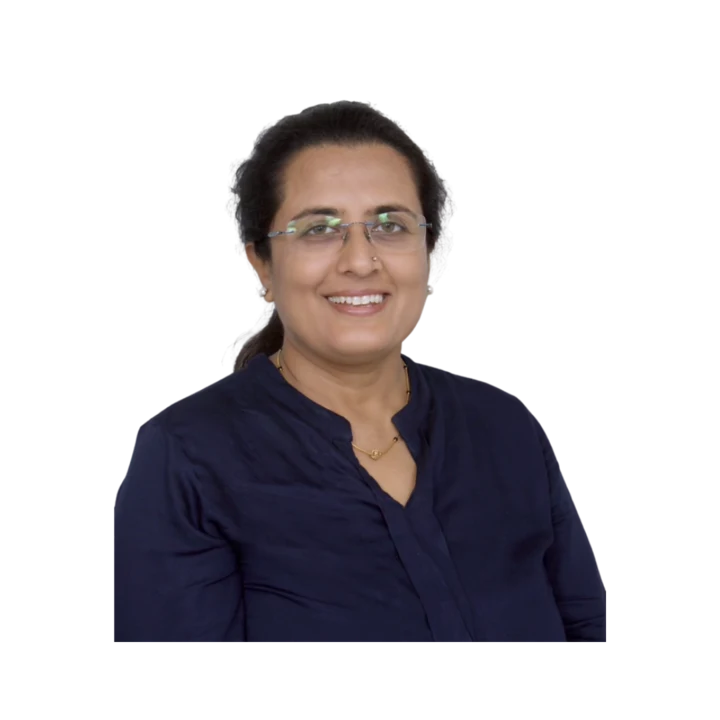
Learn directly from Kajal Ma'am
An MCA who has taught computer subjects since 2004, Kajal Mehta personally mentors every batch, turning dense theory into clear, exam-ready understanding.
The Kwickprep Method
Computer subjects are not learnt by memorising code. Since 2006, Kajal Ma'am has taught CBSE Class 12 Artificial Intelligence (AI) with one simple loop that turns logic into marks:
Concept in plain words
Every topic starts from why it exists and what problem it solves, before any code.
Worked through live with you
Kajal Ma'am writes and runs it on a shared screen, so you see it work, not just read it.
Board-pattern practice
You solve the exact question types that repeat in your board's paper, section by section.
Doubts till it clicks
Ask anything, any time in the live class. Nothing moves on until the concept is clear.
Exam & practical drill
Full papers, the practical file, the project and viva, rehearsed until you walk in confident.
Where this takes you
This is not just a subject to clear, it is a skill that carries forward:
- →The AI project cycle how real AI products are actually built, end to end.
- →Data literacy & Python the language of AI and data science.
- →Machine-learning basics a head start in the fastest-growing field in tech.
It opens AI, machine-learning and data-science paths, the careers of the next decade, and gives a head start most students never get. We teach for the board first, and for the thinking that lasts after it.
What students say
“The Educator is very experienced and talented.”
“Learning with kwickprep has been a wonderful experience. It has a very user friendly interface and is aesthetically pleasing. It provides all the important points and the proper explanation of the topics without prevaricating from the original topic.”
“My experience with Kwickprep was good. They guided me well for the Boards. That's why I would recommend Computer Science Aspirants to join Kwickprep, as their teaching and study material is the best among all others. Kwickprep is the best choice for classes 11 and 12.”
Read all 36 verified student & parent reviews (4.9/5) or see the board results.
Course FAQs
Are the CBSE Class 12 AI classes online or offline?+
Who can join this CBSE Class 12 Artificial Intelligence course?+
How are the fees structured for Group batch versus One-to-One?+
Is the course aligned to the official CBSE 843 syllabus?+
Will I get help with the practical exam, Capstone Project and viva?+
Can I attend a demo class before enrolling?+
Related courses
Computer Applications
Master computer fundamentals, cyber safety, and office tools for CBSE Class 9 Computer App
Computer Applications
Master web design with HTML, CSS, networking and cyber ethics for the CBSE Class 10 Comput
Computer Science
Master Python programming and computational thinking with the official CBSE Class 11 Compu
Free guides for this subject
CBSE Class 12 Artificial Intelligence Syllabus, Units & Marks
CBSE Class 12 Artificial Intelligence syllabus for 2026-27: all 10 units, the topics inside each, the exam pattern and p
Open →CBSE Class 12 · Artificial IntelligenceCBSE Class 12 Artificial Intelligence Practical File, Python Programs with Output
Free CBSE Class 12 Artificial Intelligence (843) practical file — Python programs for data handling, missing values, tra
Open →CBSE Class 12 Artificial Intelligence ·CBSE Class 12 Artificial Intelligence Practical Viva Questions, with Answers
16 viva questions for the CBSE Class 12 Artificial Intelligence practical, each with the answer a student should be able
Open →What students & parents say
4.9/5 from 36 verified student & parent reviews. Below are three, unedited.
Very knowledgeable teacher, with thorough understanding of current paper pattern, FAQs, as well as syllabus.
I was able to get my doubts cleared and I had access to a lot of material. Always got response within the committed time.
My Twin daughter attended 15 day Class 12 Computers online revision crash course right before the Board Exams. The sessions were very organized with all topics and chapters covered comprehensively. They had access to chapter wise notes and previous years question papers and sample papers after login which were very helpful. Kajal Ma'am teaching was excellent and my kids were very happy with the benefit they received. The backend was seamless and I was very impressed by the professionalism and proactive methods utilized to give the best for the students. I recommend Kwickprep and Kajal Ma'am unreservedly.
Book a free demo for Artificial Intelligence
See a real class before you decide. No pressure, no payment.
Book Free Demo on WhatsApp